Elevating the Humble Oat
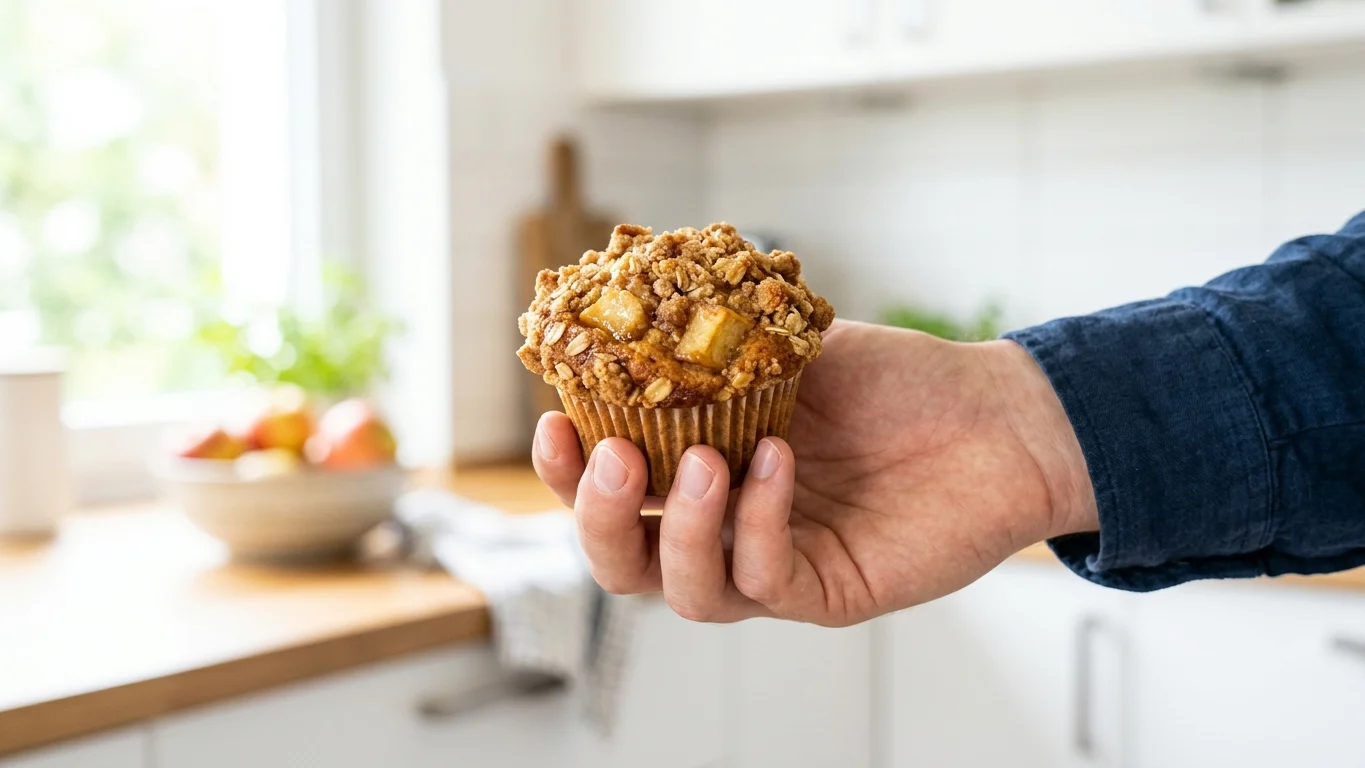
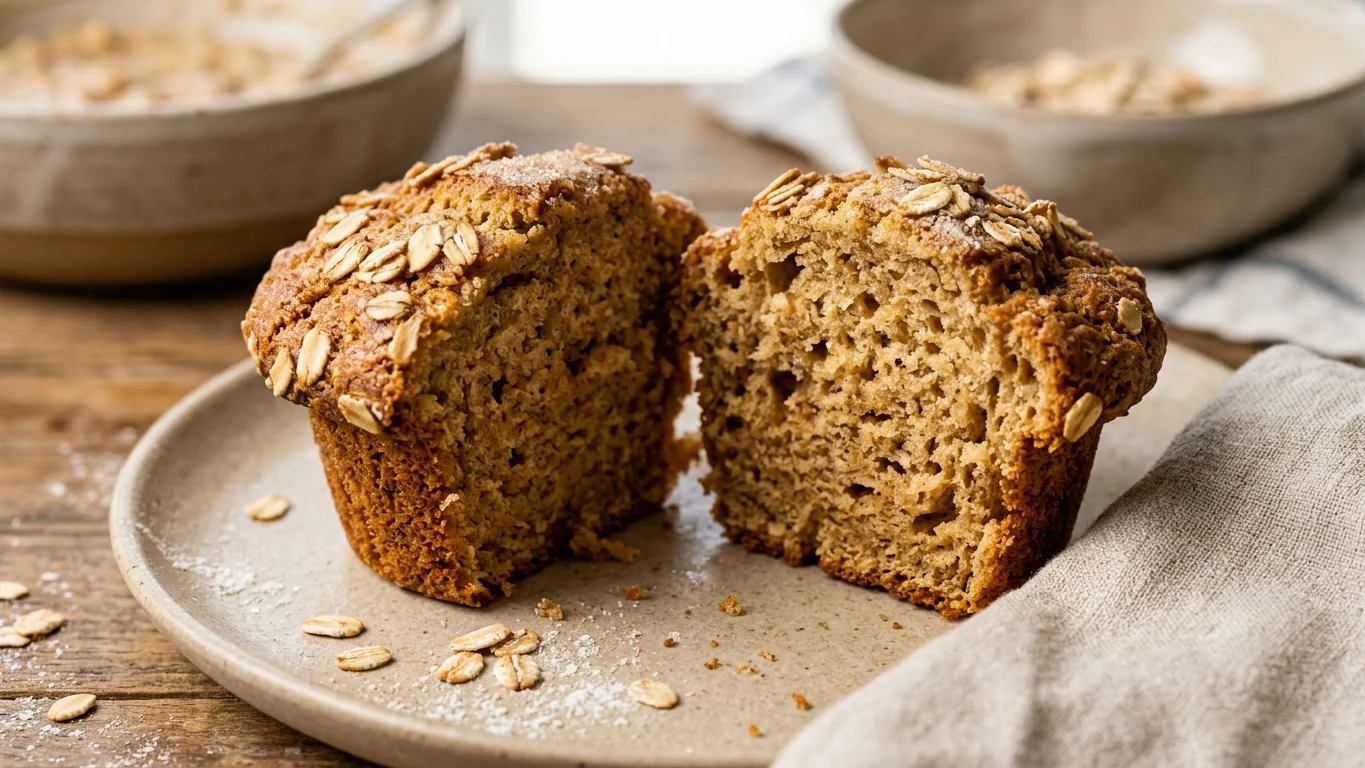
Porridge certainly has its place, but the true culinary potential of the humble oat lies firmly in the pastry kitchen. By applying foundational baking techniques, we can transform rolled oats into an exquisite, elevated morning pastry. These muffins boast a deeply roasted nuttiness and a tender, moist crumb that commands attention.
As a chef, I demand precision even in rustic baked goods. This specific formulation delivers a sophisticated flavor profile that brings your breakfast to a high culinary standard. Throw away the concept of dense, heavy bran muffins and prepare for something beautifully aerated.
The Science of Hydrating Oats
The most common amateur mistake when baking with oats is skipping the critical hydration phase. Dry oats aggressively wick moisture from your batter during the baking process. This inevitably results in a dense, crumbly muffin that tastes unpleasantly dry.
To prevent this, we employ a brief soaking technique using cultured dairy. Buttermilk or whole milk yogurt breaks down the phytic acid in the oats while providing the necessary lactic acid. This acid is crucial for activating our leavening agents, guaranteeing a spectacular oven spring and a soft, velvety interior.
Toasting for Aromatic Depth
Before liquid ever touches the grain, you must toast your rolled oats. Spreading them on a sheet pan for ten minutes in a 350°F (175°C) oven awakens their dormant essential oils. This is a non-negotiable step in professional kitchens.
The Maillard reaction occurs on the surface of the grain, creating a profound, butterscotch-like aroma. This simple, rapid technique distinguishes an average home-baked good from a top-tier bakery offering. The resulting flavor depth acts as the perfect backbone for warm spices like cinnamon and nutmeg.
Master Recipe and Culinary Specifications
Precision dictates the outcome in the pastry arts. Weigh your ingredients meticulously, utilizing grams for dry components to ensure exact hydration ratios every single time. Consistency separates the professional from the novice.
Resist the urge to aggressively whisk the batter once the wet and dry elements finally converge. A lumpy, barely-mixed batter is exactly what you need to achieve a tender, aerated crumb structure. Overmixing develops gluten, which is the enemy of a delicate pastry.
| Culinary Parameter | Specification Details |
|---|---|
| Total Cooking Time | Prep: 15 minutes Bake: 18-20 minutes Total: 35 minutes |
| Ingredients & Weights |
|
| Expert Pairings | Serve these warm alongside cultured European butter and a tart blackberry or rhubarb compote. For a beverage pairing, the robust nuttiness of the oat crumb pairs flawlessly with a bright, washed-process Ethiopian espresso or a robust English Breakfast tea. |
Executing the Perfect Bake
We utilize a dual-temperature baking method to achieve that coveted bakery-style domed top. Start your oven at a blistering 425°F (220°C) to immediately activate the baking powder and create rapid structural lift. This blast of initial heat sets the edges quickly, forcing the center of the batter upwards.
After exactly five minutes, drop the ambient temperature to 350°F (175°C) to gently cook the interior. This ensures the center is fully baked without scorching the delicate, caramelized oat crust on top.
Allow the finished muffins to cool in the pan for no more than five minutes before transferring them to a wire rack. Leaving them in the hot tin any longer causes steam to condense against the metal. That trapped moisture will instantly ruin your perfectly crisp edges.