The Culinary Science of Perfect Poultry
Transforming a lean, boneless chicken breast into a succulent, flavorful centerpiece requires precision rather than luck. As a chef, I view poultry as a blank canvas demanding strict attention to temperature and technique. This method guarantees a beautifully browned exterior and an incredibly juicy interior every single time.
The secret to professional-grade poultry lies in a technique known as liquid brining. By submerging the meat in a highly specific solution of salt and water, we fundamentally alter the muscular composition of the bird. This vital step prevents the dreaded dry, chalky texture traditionally associated with overcooked white meat.
Altering Protein Structures for Maximum Moisture
When chicken sits in a mild saltwater solution, the sodium ions work to dissolve tightly wound muscle proteins. This relaxation allows the meat to absorb and retain significantly more water during the high-heat cooking process. Adding a touch of sugar to this liquid balances the salinity while laying the groundwork for superior caramelization later.
Precise Preparation and Technique
Prior to brining, mechanical tenderization is absolutely critical for even cooking. Natural chicken breasts taper dramatically from one end to the other, guaranteeing an uneven internal temperature if left unaltered. Using a meat mallet to pound the protein to a uniform half-inch (1.27 cm) thickness ensures the entire cut cooks at the exact same rate.
The Maillard Reaction and High-Heat Roasting
We do not roast lean poultry low and slow; doing so dehydrates the meat before it develops flavor. Coating the dried, brined chicken with olive oil and a tailored spice rub accelerates the Maillard reaction. A blazing 425°F (218°C) oven creates a gorgeous, seasoned crust while rapidly bringing the center to a safe temperature.
Recipe Specifications, Ingredients, and Pairings
| Category | Professional Specifications & Measurements |
|---|---|
| Total Time | Prep: 40 minutes | Cook: 20 minutes | Rest: 10 minutes | Total: 1 hour 10 minutes |
| The Brine |
|
| The Dry Rub |
|
| Expert Pairings |
|
Step-by-Step Professional Execution
Begin by placing the breasts between two sheets of heavy-duty plastic wrap on a sturdy cutting board. Gently strike the thickest portion with a meat mallet, moving outward until each piece measures an even half-inch thickness.
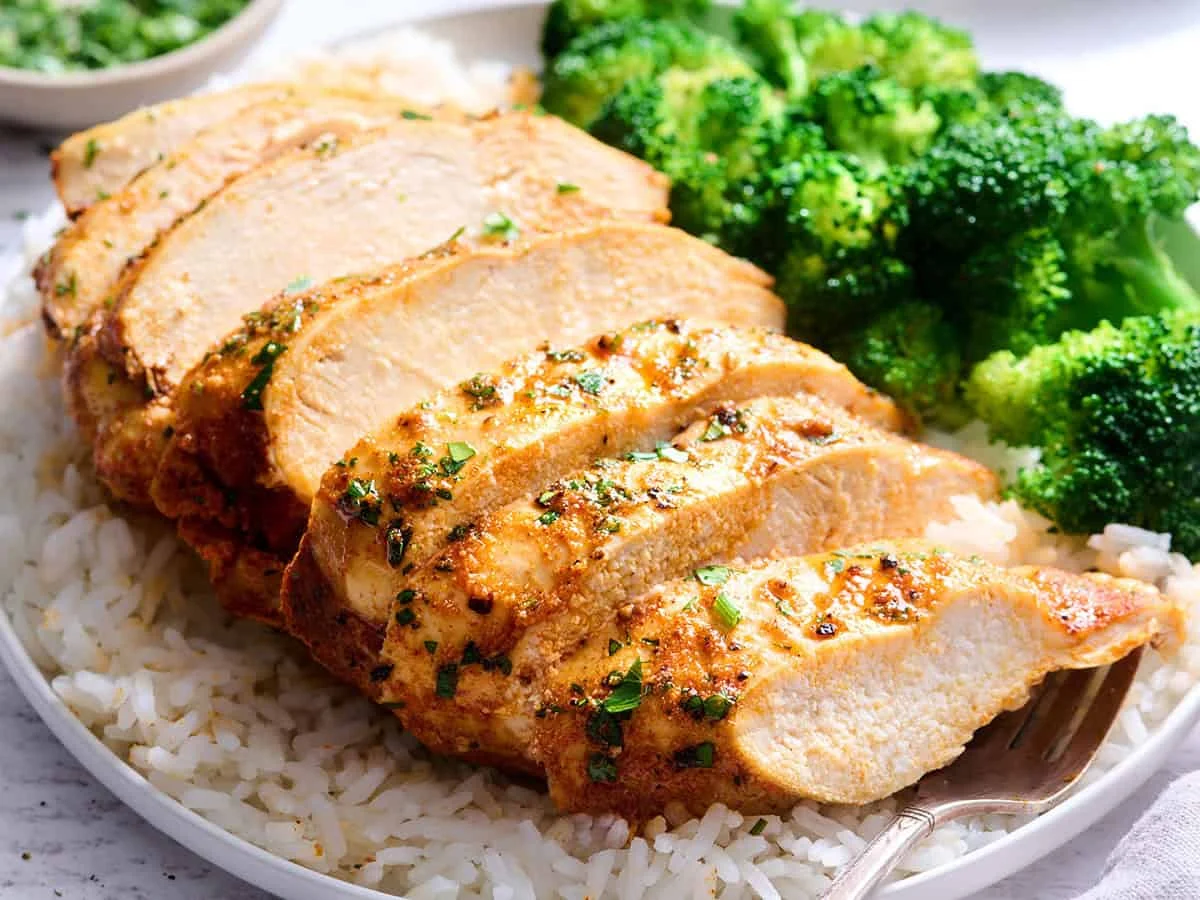
Submerge the prepared poultry in your cold brine solution. Refrigerate for exactly 30 minutes, as exceeding 45 minutes will permanently degrade the cellular structure, resulting in an unpleasant mushy texture.
Remove the chicken from the brine, rinse briefly under cold water, and dry aggressively with paper towels. Surface moisture is the absolute enemy of browning, so ensure the meat is completely dry before applying the oil and spice rub.
Bake on a heavy-duty rimmed sheet pan at 425°F (218°C) for 18 to 20 minutes. Pull the chicken from the oven the moment a calibrated instant-read thermometer registers 160°F (71°C) in the geometric center of the thickest breast.
The Critical Resting Period
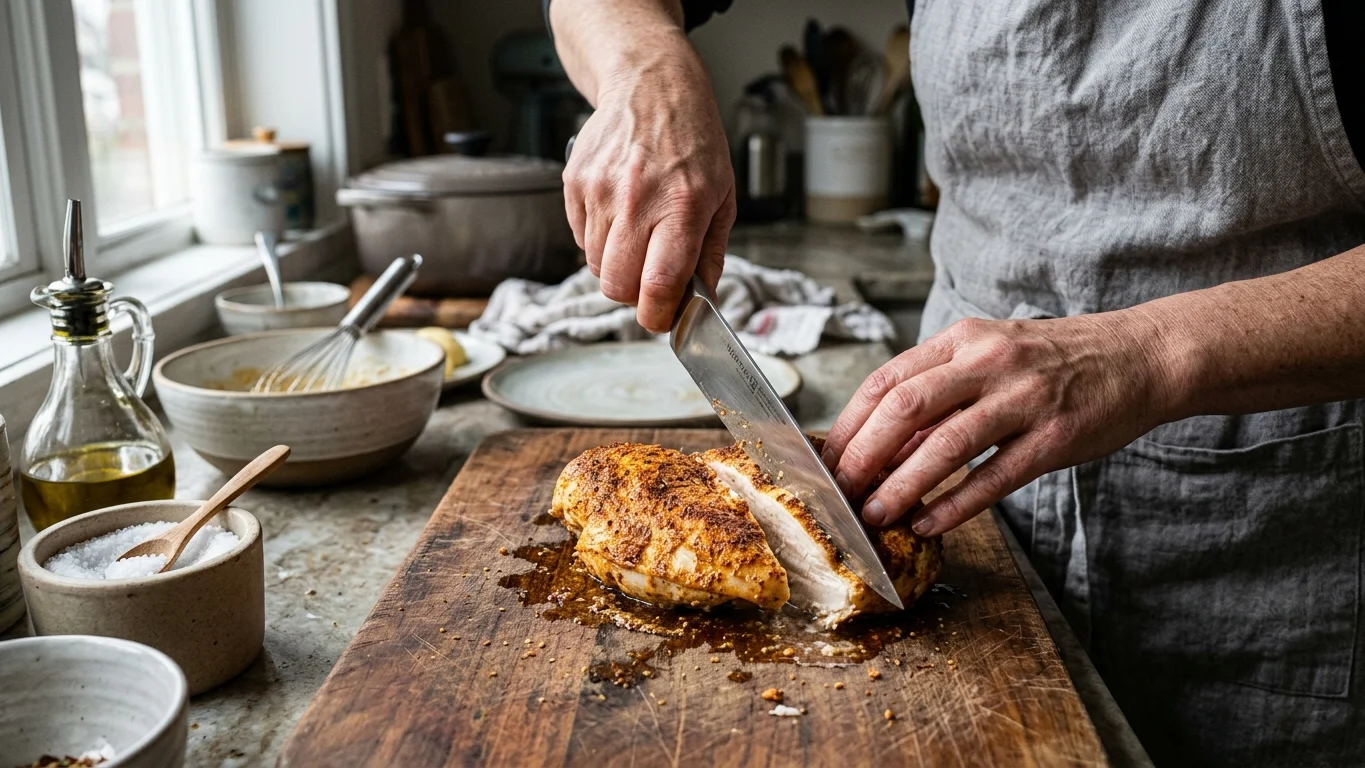
Pulling the meat at 160°F accounts for carryover cooking, a phenomenon where the internal temperature continues to rise off the heat to hit the safe 165°F (74°C) target. Tent the chicken loosely with aluminum foil and let it rest undisturbed on a carving board for 5 to 10 minutes. This mandatory pause allows the pressurized internal juices to redistribute and settle back into the muscle fibers, ensuring a perfect bite.