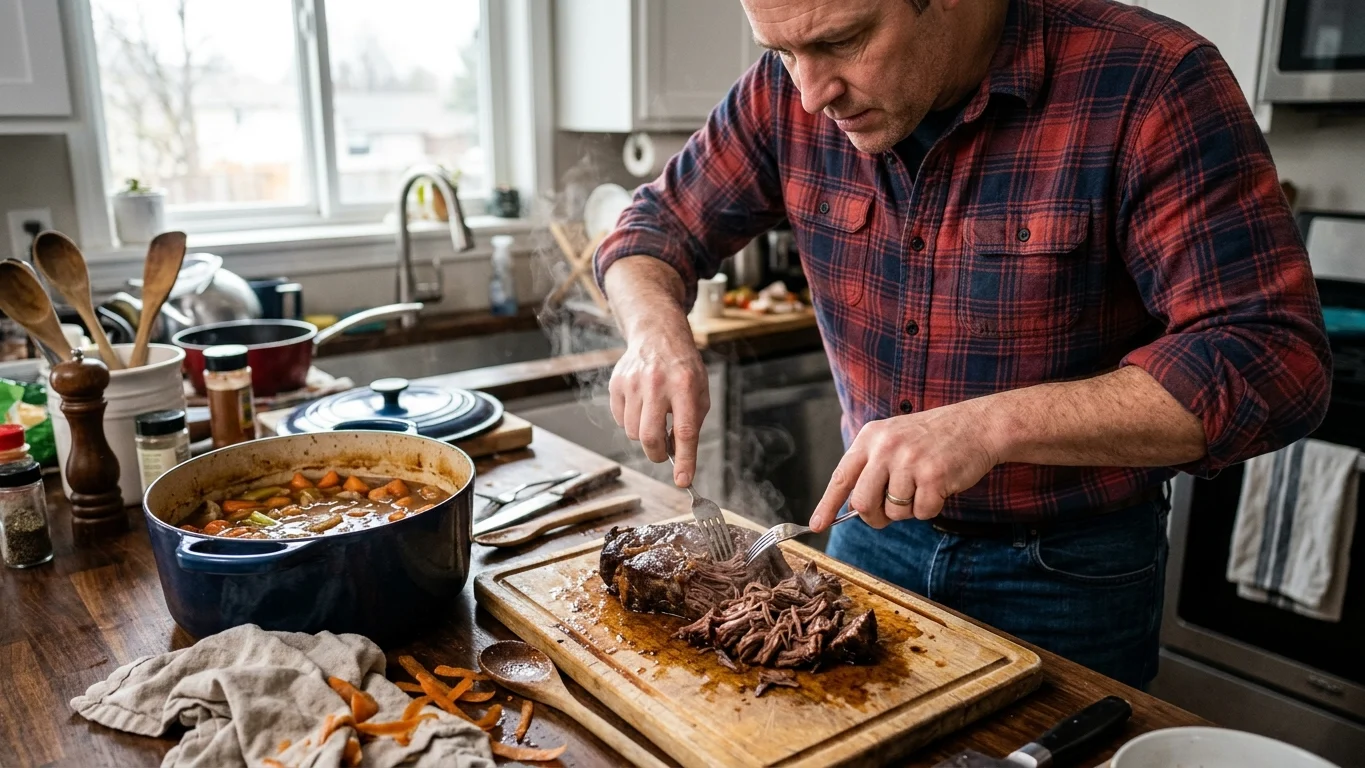
The Anatomy of a Perfect Yankee Pot Roast
Crisp October air demands dishes with deep, resonant flavors and restorative warmth. The Yankee Pot Roast stands as a cornerstone of American culinary tradition, transforming tough cuts of beef into fork-tender masterpieces. Success relies not on complicated modern gadgets, but on the timeless mastery of heat, moisture, and time.
A proper chuck roast comes from the heavily exercised shoulder of the steer, meaning it is riddled with tough collagen. When exposed to a gentle, prolonged moist heat around 200°F (93°C), that stubborn connective tissue slowly unwinds and melts into gelatin. This gelatinous transformation is exactly what provides the meat with its signature luxurious, melt-in-your-mouth texture.
If you rush the braising process by boiling the liquid, the muscle fibers will violently seize. The result will be a dry, stringy roast that no amount of gravy can salvage. Patience and precise temperature control in a heavy cast-iron Dutch oven are your greatest allies here.
The Science of Connective Tissue and Collagen
Collagen begins to break down into gelatin at approximately 160°F (71°C), but the process takes several hours to complete. Maintaining the cooking liquid at a bare simmer ensures the ambient heat gently penetrates the center of the roast. This slow thermal transfer allows the internal fat to render outward while the gelatin lubricates the muscle fibers from within.
Resting the meat after braising is just as critical as the cook itself. As the roast cools slightly on the cutting board, the relaxed muscle fibers reabsorb the surrounding juices. Carving the beef immediately out of the oven will cause those hard-earned juices to bleed out, leaving the roast disappointingly dry.
Essential Ingredients and Professional Pairings
Building a complex flavor profile requires high-quality foundational ingredients and precise ratios. The table below outlines the exact measurements needed for the roast, alongside expert timing and side dish recommendations. Properly executed, this recipe will yield enough to serve six hungry guests with leftovers for the next day.
| Component | Ingredient | Measurement / Weight | Chef’s Notes & Expert Pairings |
|---|---|---|---|
| Main Protein | Beef Chuck Roast | 3.5 lbs (1.6 kg) | Select a cut with heavy, even marbling. Season 1 hour prior. |
| Searing Fat | Beef Tallow or Canola Oil | 2 tbsp (30 ml) | High smoke point fat is required for a proper Maillard reaction crust. |
| Aromatic Base | Yellow Onions | 2 medium (300 g) | Chop roughly. Sweating these provides essential natural sweetness. |
| Aromatic Base | Carrots | 4 large (400 g) | Cut into thick 2-inch pieces to withstand the long braise. |
| Aromatic Base | Celery | 3 stalks (150 g) | Cut to match the carrots. Forms the classic mirepoix trio. |
| Deglazing Liquid | Dry Red Wine | 1 cup (240 ml) | Use a robust Cabernet Sauvignon to lift the fond from the pan. |
| Braising Liquid | Unsalted Beef Stock | 2 cups (480 ml) | High-quality bone broth yields a much silkier final gravy. |
| Herbs | Fresh Thyme & Rosemary | 3 sprigs each | Tie into a tightly bound bouquet garni with kitchen twine. |
| Thickener | Butter & All-Purpose Flour | 2 tbsp each (28 g each) | Knead together into a beurre manié to thicken the pan juices. |
| Logistics | Total Cooking Time | 3.5 to 4 Hours | Braise strictly at 275°F (135°C) until meat yields to a fork. |
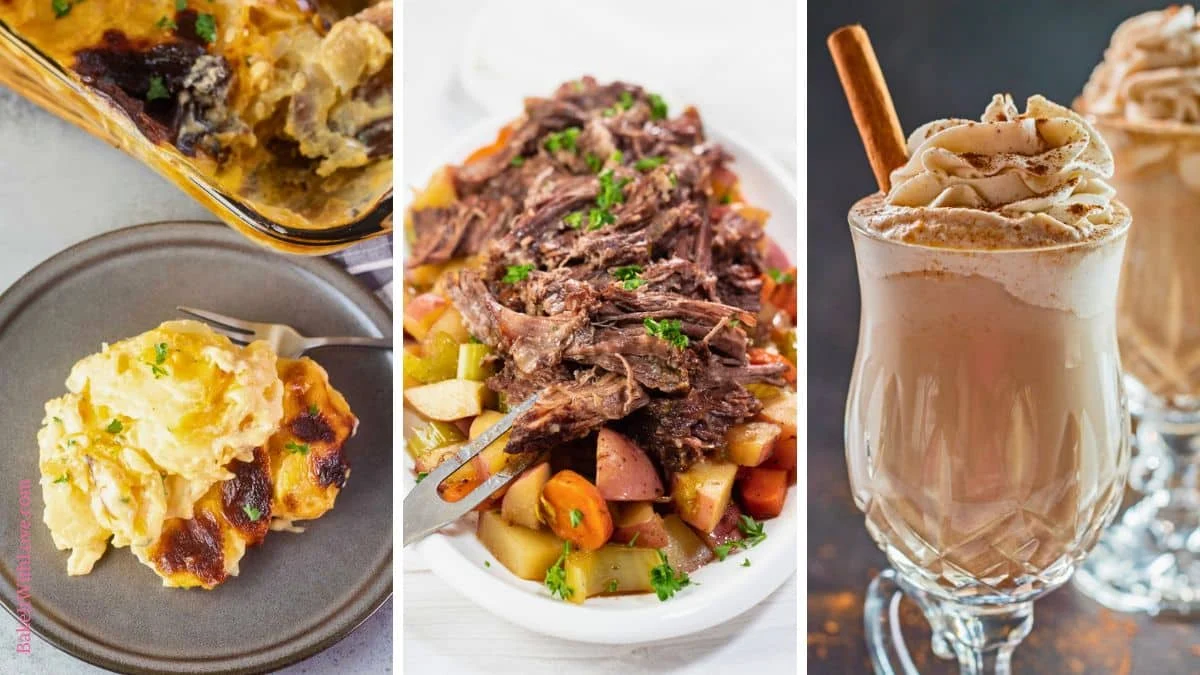
| Expert Pairing | Side Dish Recommendation | N/A | Serve over Velveeta Scalloped Potatoes to absorb the rich gravy. |
| Expert Pairing | Vegetable Accompaniment | N/A | Bacon Brown Sugar Glazed Brussels Sprouts add smoky, sweet contrast. |
Professional Preparation and Braising Method
Begin by aggressively seasoning your chuck roast with coarse kosher salt at least one hour before cooking. Heat your heavy cast-iron Dutch oven over medium-high heat until the beef tallow just begins to smoke. Sear the beef ruthlessly on all sides until a deep, dark mahogany crust forms.
This critical searing step builds the fundamental flavor profile through the Maillard reaction. Once properly browned, remove the beef to a resting plate and reduce the heat to medium before introducing your onions, carrots, and celery. Sauté the mirepoix until lightly caramelized, then pour in the dry red wine to deglaze the hot pan.
Use a flat wooden spoon to aggressively scrape up every bit of the browned fond clinging to the bottom of the pot. This sticky residue is pure culinary gold and forms the backbone of a rich, professional-grade sauce. Return the roast to the pot, nestling it firmly among the caramelized root vegetables.
Pour in the beef stock until it reaches exactly halfway up the side of the meat. Submerging the beef entirely will essentially boil it, while too little liquid prevents proper steam generation. Toss in your bouquet garni, cover tightly with a heavy lid, and transfer to a preheated 275°F (135°C) oven.
Building the Gravy: From Pan Drippings to Velvet
Once the meat offers absolutely zero resistance to a carving fork, carefully transfer it to a warm cutting board. Strain the braising liquid into a saucepan, discarding the spent herbs, and quickly skim the excess fat from the surface. Reduce this fortified liquid over medium-high heat on the stove to concentrate its savory beef notes.
To achieve a glossy, velvet-textured gravy, whisk in your beurre manié piece by piece. Allow the sauce to simmer gently for five minutes to activate the starches and cook out any raw flour taste. Slice the rested beef thickly against the grain and ladle the hot, reduced gravy generously over the top.