The Art of the Perfect Pad Thai
True culinary mastery lies in the precise execution of foundational dishes. Pad Thai is essentially a masterclass in flavor balancing, requiring an intimate understanding of sweet, sour, salty, and spicy elements. When properly prepared, this iconic noodle dish delivers a complex symphony of textures and aromas.
Many home cooks mistakenly treat Pad Thai as a simple stir-fry, resulting in claggy noodles and muted flavors. The secret to a restaurant-quality plate rests in aggressive heat and impeccable mise en place. Once your pan hits the flame, the cooking process happens in mere minutes.
The Culinary Science of Noodle Hydration
Achieving the characteristic chewy texture of Pad Thai requires specific handling of dried rice noodles. Boiling them violently will cause the delicate starches to break down, resulting in a mushy final product. Instead, proper technique dictates steeping the noodles in off-the-boil water.
Submerge your 4.4 oz (125g) of wide rice noodles in a large, heatproof bowl filled with boiling water for exactly four minutes. Immediately drain and shock them under cold running water. This thermal shock halts the cooking process and removes excess surface starch, ensuring the noodles remain distinct in the wok.
Recipe Specifications and Ingredients
Professional cooking demands exact measurements and absolute preparation. Below is the comprehensive breakdown of everything required to execute this dish flawlessly. Ensure all ingredients are measured, chopped, and stationed by your stove before applying heat to your pan.
| Component | Measurement and Weight |
|---|---|
| Total Cooking Time | 30 minutes (25-30 minutes ready time) |
| Expert Pairings | Green Papaya Salad (Som Tum), Tom Yum Soup, or a crisp dry Riesling |
| Dried Wide Rice Noodles | 4.4 oz (125g) |
| Fresh Lime Juice (about 2 limes) | 3 Tbsp |
| Cayenne Pepper | 0.5 tsp |
| Light Muscovado or Brown Sugar | 2 tsp |
| Premium Fish Sauce (Nam Pla) | 2 Tbsp |
| Neutral Vegetable Oil | 2 Tbsp |
| Cooked Tiger Shrimp (Tails on) | 7 oz (200g) |
| Scallions (Spring Onions), sliced | 4 whole stalks |
| Fresh Bean Sprouts | 5 oz (140g) |
| Salted Peanuts, finely chopped | 0.9 oz (25g) |
| Fresh Cilantro (Coriander) Leaves | 1 small handful |
| Fresh Limes (Cut into wedges) | 1 to 2 whole |
| Sweet Chili Sauce | To taste, for serving |
Execution and Method
Begin by mastering your sauce base, which acts as the flavor anchor for the entire dish. Whisk together the fresh lime juice, cayenne pepper, light muscovado sugar, and fish sauce in a small prep bowl. Continue agitating the mixture until the sugar crystals completely dissolve into the liquid.
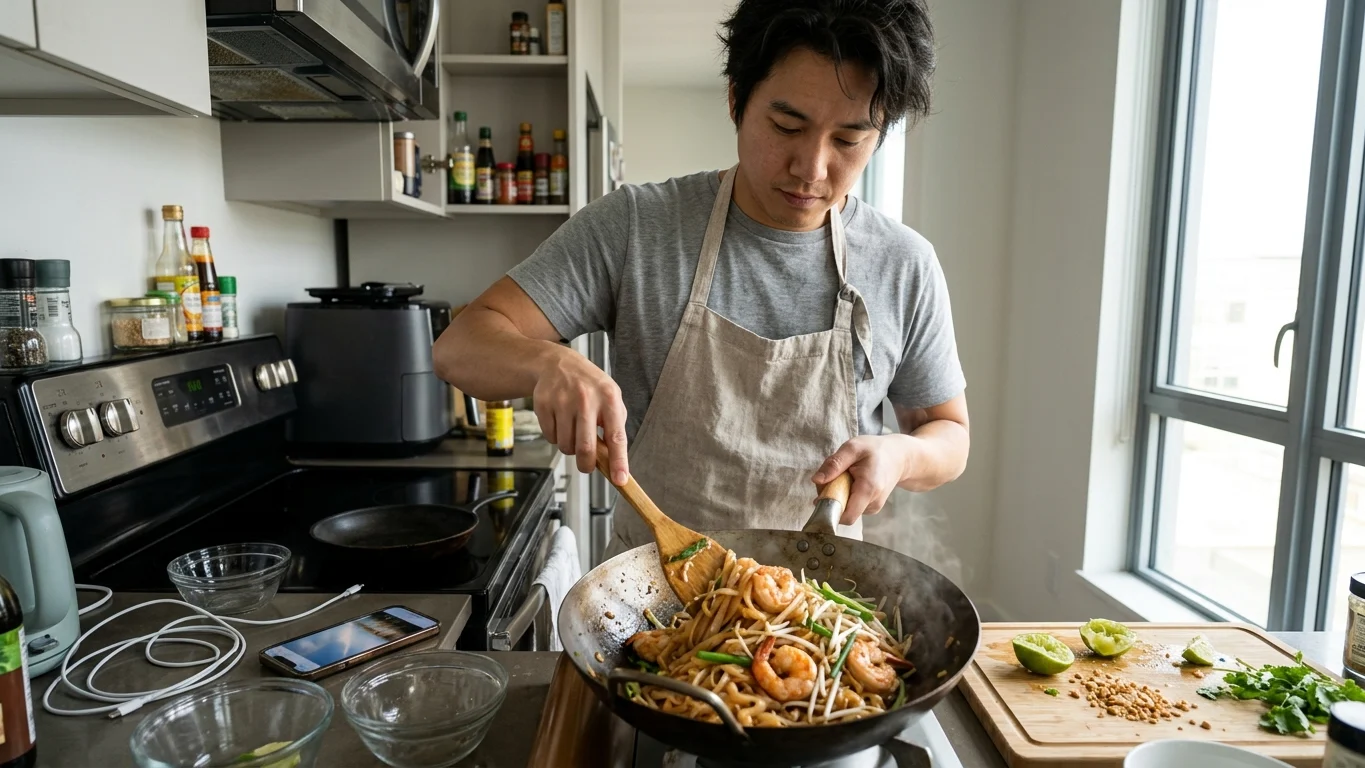
Heat a heavy-bottomed skillet or carbon steel wok over high heat, then introduce your vegetable oil. Once the oil shimmers, flash-fry the cooked tiger shrimp just until they are thoroughly warmed through. Immediately add the sliced scallions and your properly hydrated rice noodles, tossing continuously to prevent sticking.
Pour the prepared sauce directly over the noodles, letting the intense heat caramelize the sugars slightly. Fold in the fresh bean sprouts, half of the crushed salted peanuts, and the torn cilantro leaves. Toss the entire mixture for exactly one minute until all ingredients are uniformly heated and intensely aromatic.
Transfer the steaming noodles to a warmed serving platter immediately to prevent carryover cooking. Garnish the dish with the remaining chopped peanuts and a generous scatter of fresh cilantro. Serve alongside freshly cut lime wedges and a high-quality sweet chili sauce for localized seasoning.