The Alchemy of Peanut Satay and Acidic Crunch
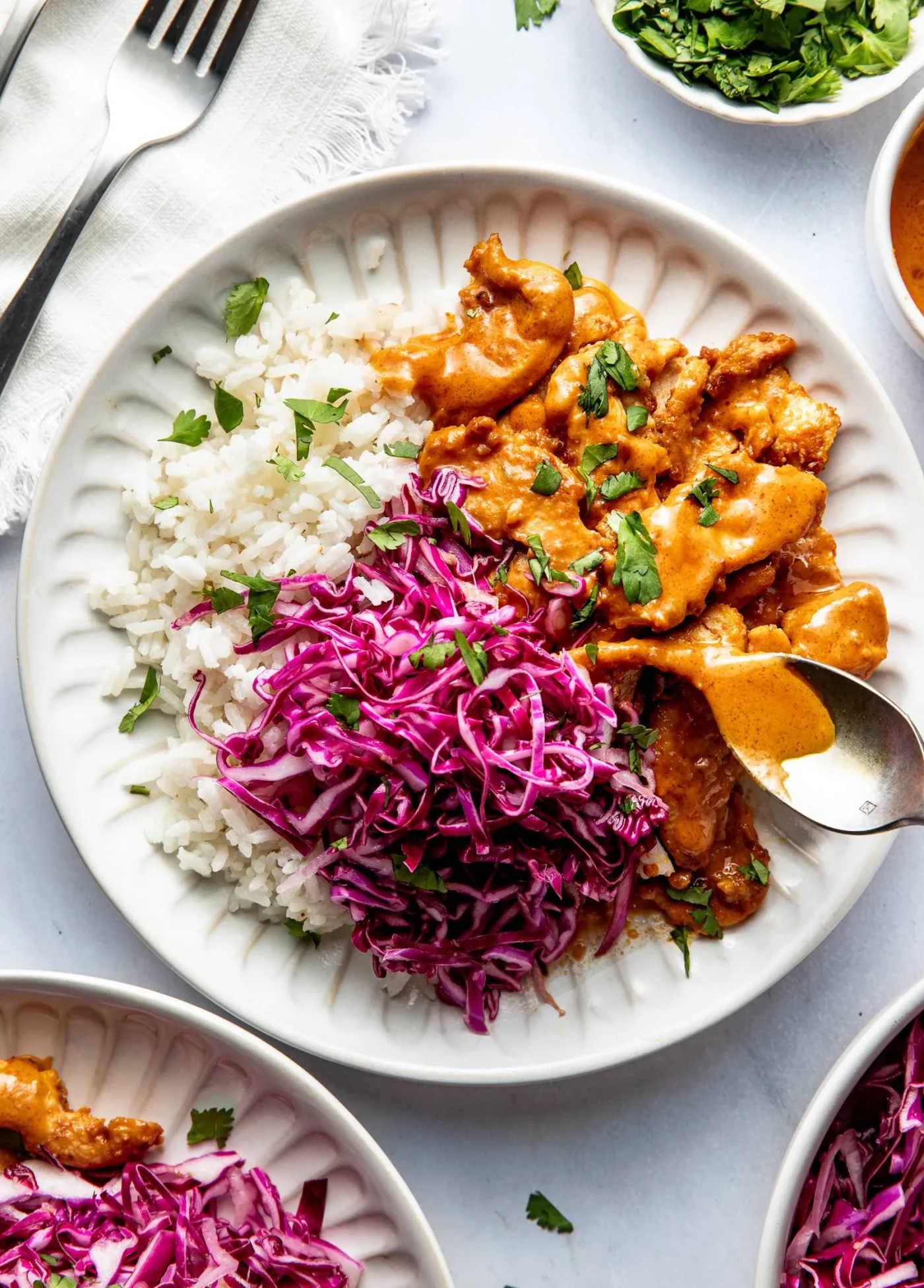
Balancing heavy lipid content with sharp acidity is the foundational secret to mastering Southeast Asian-inspired flavor profiles. In this preparation, we harness the fatty, savory depth of peanut satay sauce and forcefully contrast it with a bright, acidic ginger slaw. The result is an impeccably balanced plate where every distinct component commands your palate’s attention.
Relying on high-quality prepared sauces, like a premium peanut satay, allows the chef to focus entirely on technique rather than raw component assembly. The naturally high sodium and sugar levels in the satay paste act as a rapid brine, penetrating the chicken‘s muscle fibers in minutes. We pair this robust protein with a flawlessly cooked, aromatic coconut grain base.
The Science of Coconut Jasmine Rice
Achieving distinct, fluffy coconut rice requires precise hydration ratios to prevent the fragile grains from collapsing into a dense paste. By combining exactly two cups of jasmine rice with fourteen ounces of full-fat coconut milk and one and a half cups of water, we optimize starch gelatinization. Rinsing the rice beforehand is non-negotiable; this eliminates excess surface amylose, ensuring individual grains that eagerly absorb the rich coconut emulsion.
Recipe Specifications and Culinary Matrix
Precision is paramount when managing distinct textures and cooking times in a multi-component bowl. Review the technical matrix below to ensure you have the exact ratios and timelines required for this execution. Mise en place is critical here, as the high-heat cooking phase demands immediate attention.
| Category | Component | Precision Measurement |
|---|---|---|
| Protein Fabrication | Boneless skinless chicken breasts, sliced | 1 lb (454g) |
| Protein Fabrication | Peanut Satay Sauce | 1/4 cup (60g) |
| Protein Fabrication | Fresh garlic, microplaned | 1 clove (or 1.5g granulated) |
| Protein Fabrication | Avocado oil | 1 tbsp (15ml) |
| Coconut Rice | Jasmine rice, thoroughly rinsed | 2 cups (400g) |
| Coconut Rice | Full-fat canned coconut milk | 14 oz (400ml) |
| Coconut Rice | Filtered water | 1 1/2 cups (360ml) |
| Ginger Slaw | Purple cabbage, shaved via mandoline | 4-5 cups (350g) |
| Ginger Slaw | Unseasoned rice vinegar | 3 tbsp (45ml) |
| Ginger Slaw | Granulated sugar | 2 tbsp (25g) |
| Ginger Slaw | Ginger paste or freshly grated ginger | 1 tbsp (15g) |
| Ginger Slaw | Shallot, shaved via mandoline | 1 unit (approx. 40g) |
| Seasoning | Kosher salt | Divided application (approx. 9g total) |
| Timeline | Total Preparation & Cooking Time | 35 Minutes (15m prep, 20m active heat) |
| Expert Pairings | Recommended Side Dishes | Charred Chinese broccoli (gai lan), blistered shishito peppers, or a dry Riesling to complement the ginger. |
Professional Preparation Method
Stage 1: Protein Marination
Combine the thinly sliced chicken breasts with the peanut satay sauce, freshly microplaned garlic, and a half-teaspoon of kosher salt in a non-reactive bowl. Allow the mixture to rest at ambient temperature for 15 to 30 minutes. This essential resting period initiates enzymatic breakdown and seasons the interior of the protein before applying thermal stress.
Stage 2: Starch Gelatinization
Agitate the jasmine rice under cold running water until the runoff turns completely clear, stripping away the exterior starch. Transfer the rinsed grains to a heavy-bottomed saucepan alongside the filtered water, coconut milk, and one teaspoon of salt. Bring the liquid to a gentle simmer, cover with a tight-fitting lid, and hold over low heat for exactly 15 minutes before fluffing with a fork.
Stage 3: Acidic Maceration
In a stainless steel mixing bowl, aggressively whisk together the rice vinegar, granulated sugar, ginger paste, and salt until the sucrose crystals fully dissolve. Introduce the finely shaved purple cabbage and shallots to this harsh acidic brine. Physically massage the mixture with your hands for two to three minutes to fracture the rigid cellulose walls and force rapid osmosis.
Stage 4: High-Heat Searing
Heat the avocado oil in a wide, heavy-gauge nonstick skillet over medium-high heat until the oil begins to shimmer. Lay the marinated chicken flat into the pan in a single, even layer to maximize pan contact and provoke the Maillard reaction. Toss the protein continuously for three to five minutes until the meat registers an internal temperature of 165°F (74°C) and takes on caramelized edges.
Chef’s Plating Note: Construct the dish vertically. Form a firm bed of the steamed coconut rice, cascade the seared peanut chicken over the top, and crown the structure with an unapologetic handful of the vibrant, macerated slaw.