
The Culinary Science of Alfredo in a Broth
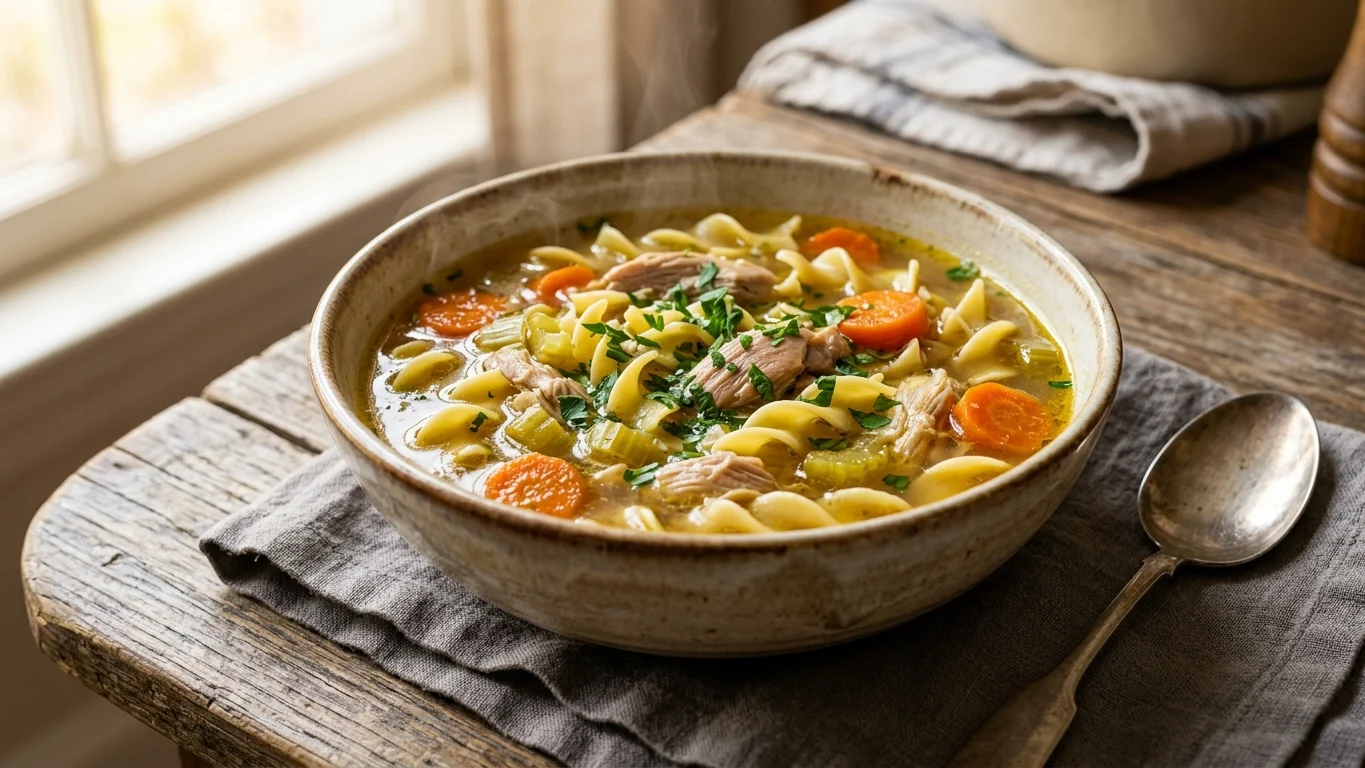
The translation of a classic Roman pasta preparation into a spoonable, comforting broth requires intense culinary precision. Chicken Alfredo Soup is not merely a diluted pasta sauce; it is a carefully calibrated emulsion of butter, starch, and dairy. When executed correctly, the resulting liquid is velvet on the palate, rich with the nutty salinity of aged hard cheeses.
To achieve this luxurious texture, we rely on a foundational blonde roux and the natural starch gelatinization of the pasta itself. Cooking the farfalle directly in the simmering soup allows the pasta to release amylose into the surrounding liquid. This ambient starch acts as a secondary binder, stabilizing the heavy cream and preventing the fragile cheese from breaking under heat.
Ingredient selection is absolutely paramount when building a dish with such a highly exposed flavor profile. You must bypass the pre-shredded cheese aisle entirely, as commercial shreds are coated in cellulose that will leave your broth horribly gritty. Grating genuine Parmigiano-Reggiano from the block guarantees a seamless, homogenous melt that defines elite restaurant soups.
Recipe Specifications and Mise en Place
Before firing your stove, ensure every ingredient is prepped, measured, and resting at the correct temperature. Dairy incorporates much more smoothly when it is not shocked by extreme temperature differentials. Review the precise measurements and service recommendations in the master chart below.
| Master Recipe: Chicken Alfredo Soup | ||
|---|---|---|
| Total Cooking Time | 40 minutes (15 minutes active preparation, 25 minutes simmer) | |
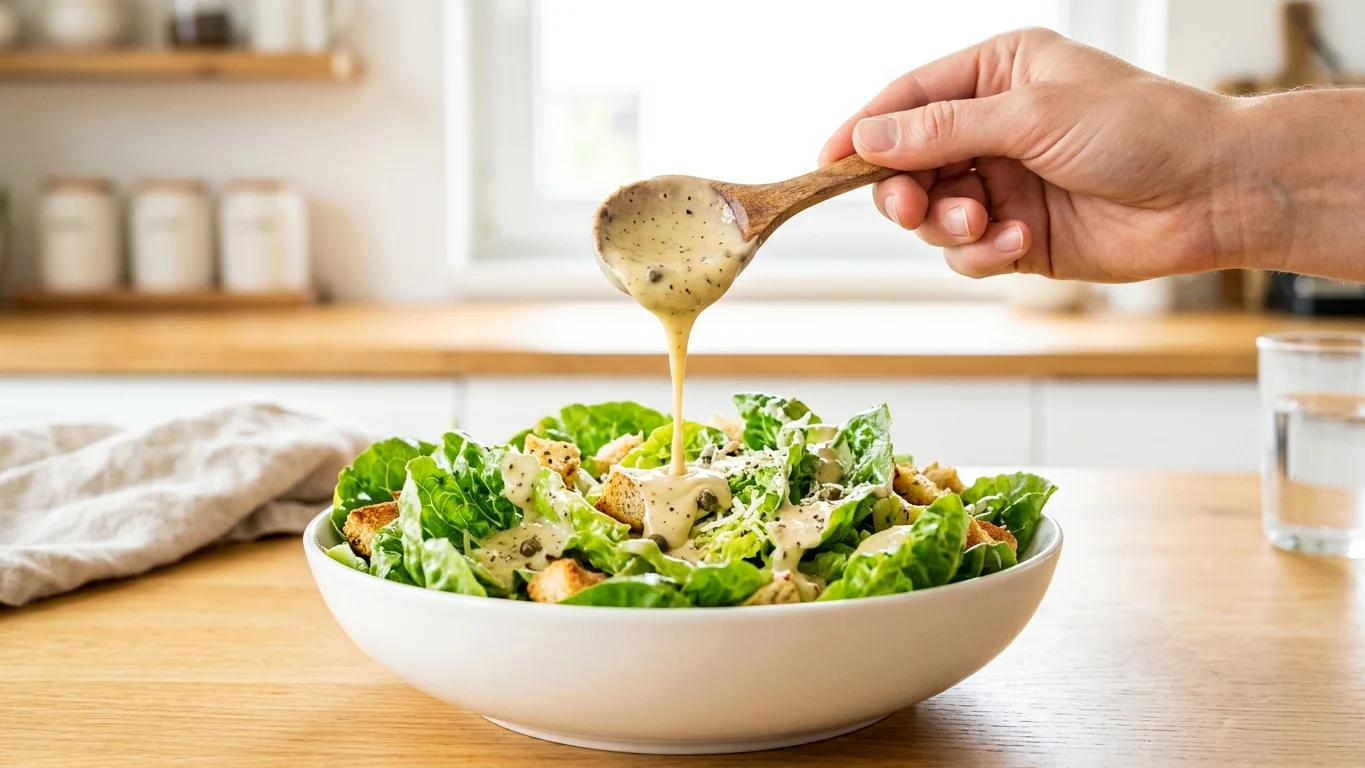
| Expert Pairings | Serve with a warm sourdough batard, crisp romaine hearts dressed in a sharp Caesar vinaigrette, or blistered broccolini to balance the dairy richness. | |
| Ingredient | US Volume | Professional Weight |
| Unsalted Butter, cubed | 6 tablespoons | 85g |
| Yellow Onion, finely brunoised | 1 medium | 150g |
| Celery, finely brunoised | 1 rib | 40g |
| Fresh Garlic, minced | 2 cloves | 6g |
| All-Purpose Flour | 1/2 cup | 60g |
| High-Quality Chicken Broth | 5 cups | 1180ml (1180g) |
| Kosher Salt | 1/4 teaspoon | 1.5g |
| Freshly Ground Black Pepper | 1/8 teaspoon | 0.3g |
| Ground Nutmeg | 1 dash | Trace |
| Heavy Whipping Cream | 2 cups | 475ml (480g) |
| Cooked Chicken, diced or shredded | 2 cups | 280g |
| Uncooked Bow Tie Pasta (Farfalle) | 8 ounces | 225g |
| Parmigiano-Reggiano, freshly grated | 1/2 cup | 45g |
| Romano Cheese, freshly grated | 1/2 cup | 45g |
| Fresh Parsley, minced | To taste | Garnish |
Executing the Technique
Building the Aromatic Base
Begin by melting the cubed butter in a heavy-bottomed rondeau or enameled Dutch oven over medium heat. Introduce the finely chopped onion and celery, allowing them to sweat gently without taking on any brown coloration. This gentle cooking extracts the natural sugars from the alliums, establishing a deep, savory foundation that supports the heavy cream.
After approximately five minutes of sweating, add the minced garlic to the pot. Cook this for a mere 60 seconds to release its volatile aromatic oils before dusting the vegetables with the all-purpose flour. Stir this mixture continuously for two minutes to cook out the raw starch flavor, resulting in a perfectly pale blonde roux.
Simmering and Starch Integration
Gradually stream the chicken broth into the hot roux, whisking constantly to prevent unsightly lumps from forming. Season the liquid with Kosher salt, black pepper, and a dash of freshly grated nutmeg. Nutmeg contains myristicin, a powerful aromatic compound that elevates the savory notes of heated dairy without imparting a sweet or spiced dessert profile.
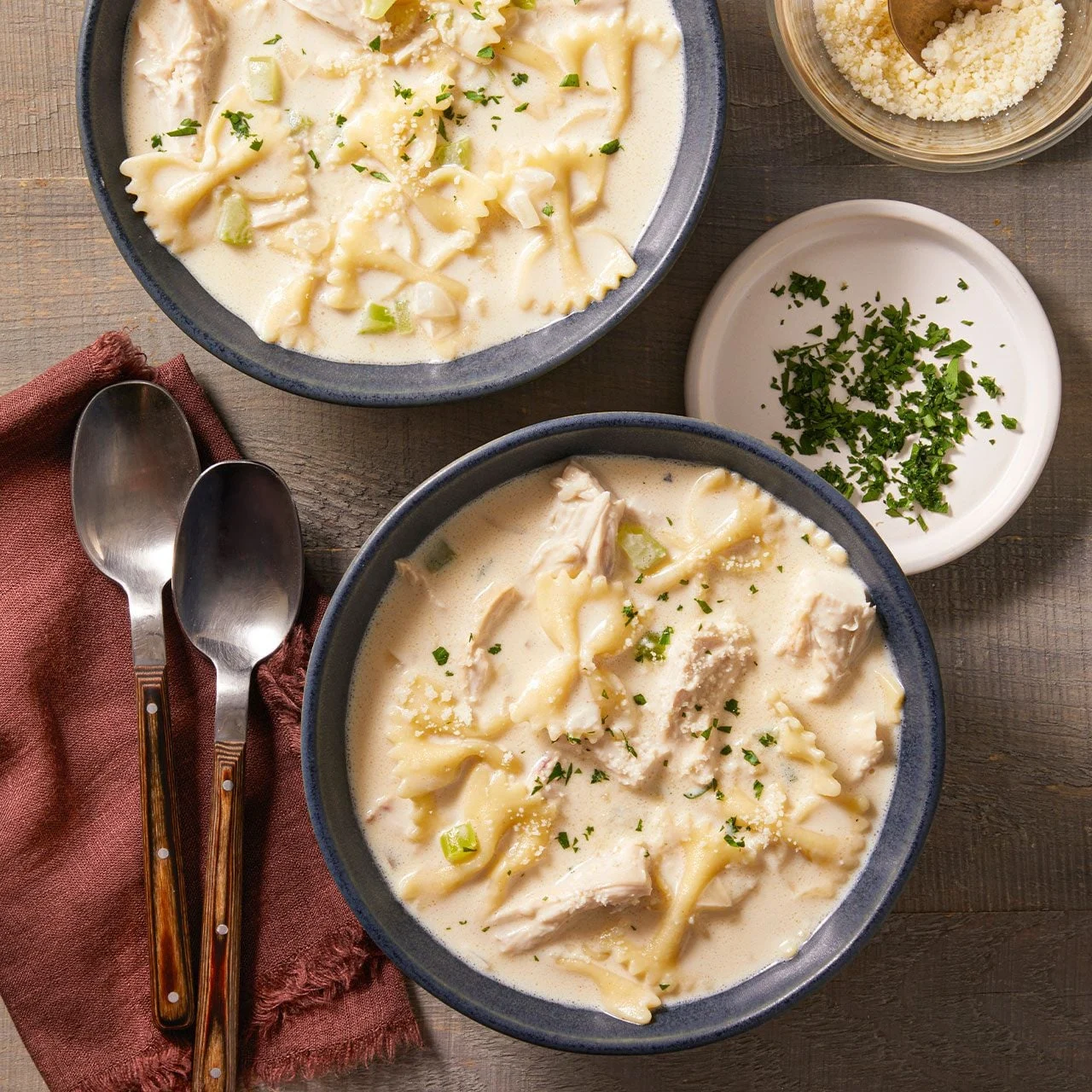
Bring the thickened broth to a gentle, rolling boil before immediately reducing the heat. Stir in the heavy whipping cream, cooked chicken, and the uncooked bow tie pasta. Maintain a steady, low simmer for 12 to 15 minutes, stirring consistently so the pasta releases its starches uniformly while reaching an ideal al dente texture.
The Final Cheese Emulsion
Once the pasta offers a pleasant resistance to the tooth, immediately remove your heavy pot from the heat source. Intense, direct heat is the absolute enemy of grated hard cheese, causing the dairy fats to quickly separate and create a greasy, broken soup. Gradually whisk in the freshly grated Parmigiano-Reggiano and Romano cheeses until they melt seamlessly into the warm, starchy broth.
Taste the soup critically to check the seasoning, keeping in mind that both the cheeses and the broth carry significant baseline salinity. Ladle the piping hot soup into warmed, shallow ceramic bowls immediately. Finish each portion with minced fresh parsley for a burst of bright, herbaceous color that cuts through the visual richness of the bowl.